

Rivendell Theatre Ensemble
presents
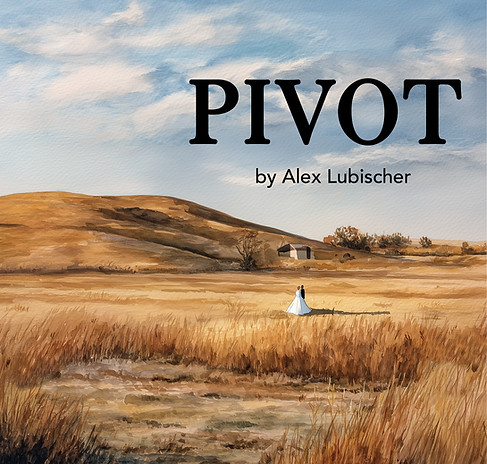
PIVOT
by Alex Lubischer
directed by RTE member Hallie Gordon
February 12 - March 21, 2026
Now Extended Through April 4th.
Regular Performances
Thursdays - Fridays at 8PM
Saturday at 4PM and 8PM
and Sunday, March 8th at 3PM
Industry Performances
Monday, March 9th and March 16th at 8PM
Open Caption Performances
Thursday, March 12th and March 19th at 8PM
Town Hall Discussions
Saturdays, March 7th, March 14th and March 21st
Immediately following the 4PM performance
Run Time
95 minutes including a 10 minute intermission
Added Performances
Wednesday, March 25th at 8PM
Thursday, March 26th at 8PM
Friday, March 27th at 8PM
Saturday, March 28th at 4PM and 8PM
Wednesday, April 1st at 8PM
Thursday, April 2nd at 8PM
Friday, April 3rd at 8PM
Saturday, April 4th at 4PM
Production Sponsors:
Cathleen Cudnowski Dixon and David Dixon

Community Partners


Rivendell kicks off their 30th Anniversary season with this exciting world premiere by Alex Lubischer (Bobbie Clearly, You Deserve to be Here), a Chicago-based, Jeff award-winning playwright originally from rural Nebraska. Directed by longtime Rivendell Ensemble member and current Senior Associate Director at the Olney Theatre Center, Hallie Gordon (Eat Your Heart Out, Dry Land, Cal in Camo) and featuring ensemble members Ashley Neal, Keith Kupferer, Glenn Obrero, Artistic Director Tara Mallen with Eric Slater as Assistant Director.
All Kara wants is a giant wedding reception and a solid three-year crop rotation plan for the farm. But when her wedding plans blow up in her face, Kara is prepared to upend the entire town of Milton, Nebraska to fight for the future that should have been hers. A dark comedy about getting your way, making a scene, and father-daughter dances to the Chicks. Save the Date.
All performances held at Rivendell Theatre, 5779 N Ridge Avenue, Chicago.
Cast

Keith Kupferer*+
George
.jpg)
Tara Mallen*+
Anne

Ashley Neal*
Kara

Glenn Obrero*
Doug

David Stobbe
Levi

Mary Cross*
U/S Anne

Jessica Ervin*
U/S Kara

Matthew Benenson Cruz
U/S Doug/Levi/Others
*Denotes Rivendell Theatre Ensemble Member
+Denotes AEA Membership
Creative Team

Alex Lubischer
Playwright

Hallie Gordon*
Director

Eric Slater*
Assistant Director
Pat Fries*, Artistic Producer
Heather Gervasi, Asst. Production Manager
Kristi Martens+, Production Stage Manager
Jackie Penrod, Scenic Designer
Janice Pytel*, Costume Designer
Diane Fairchild*, Lighting Designer
Joyce Ciesil, Sound Designer
Andres Fiz*, Projections Designer
Em Allen, Props Designer
Tanya Palmer*, Dramaturg
Madison Blackwood, Asst. Dramaturg
Casey Fort, Asst. Stage Manager
Axel Adams, Technical Director
Abby Letscher, Master Electrician/Asst. Lighting Designer
Ema Kester, Box Office Manager
Ashley Neal*, Casting Director
Glenn Obrero*, Casting Associate
Lucy Carapetyan, Intimacy Consultant
Alison Dornheggen, Violence Consultant
Devin Meseke, Scenic Painter
Hannah Culwell, Carpenter
Brit Cooper Robinson, Community Engagement
Jeff Kurysz, Production Photography
Charleigh Justice, Production Intern
*Denotes Rivendell Theatre Ensemble Member
+Denotes AEA Membership
^ Denotes a member of USA 829
Reviews


"A surprisingly funny Nebraska farm drama [that] tackles poison pesticides, coming out and forgiveness"
- Monica Eng, Axios
"A very sophisticated and smart, detailed play"
"A magnificent statement about the formation of community"
- Dueling Critics, Kelly Kleiman & Jonathan Abarbanel
“The cast is excellent... Ashley Neal gives a strong, deeply rooted and emotional performance…Director Hallie Gordon does a sharp job and makes the story move”
- Nancy S. Bishop, 3rdCoast Chicago
“Captivating, heartbreaking and humorous… an extremely talented cast [and] a gifted playwright”
“Gifted Veteran actors Keith Kupferer and Tara Mallen are especially superb as Kara’s future father- and mother-in-law, with each actor giving a topnotch performance”
“David Stobbe and Glenn Obrero are delightful”
“Hallie Gordon, has directed this thoughtful new play with sensitivity and great comic timing”
- Colin Douglas, Chicago Theatre Review
“A darkly funny, 100-minute thrill ride”
“The play soars… earning roars of laughter.”
- Mike Davis, Chicago Sun-Times/WBEZ Chicago
“An experienced cast in a dark mid-western tragedy finds such poetry and longing.”
- Chris Jones, Chicago Tribune
"A a stellar cast...Awkward and sometimes hilarious juxtapositions between profound grief and mundanity"
"A mix of gloom and bright Great Plains sunshine that underscores the blend of tragedy and comedy the characters are trying to pivot their way through"
- Kerry Reid, The Chicago Reader *Recommended
★★★★ "Truly stunning work all around” Highly recommended
- Bonnie Kenaz Mara, ChilL Live Shows
Production Photos


Photos 1-13 by Michael Brosilow, Photos 14-17 by Jeff Kurysz
Rehearsal Photos


Photos by Marcus Davis
Dramaturgical Information
“What’s a pivot?”
Center pivot irrigation is the technology behind the giant green circles visible from airplane windows over the Midwest. The system works by rotating a long sprinkler arm around a central pivot point, delivering water evenly across a circular field. Invented by Nebraska farmer Frank Zybach in the late 1940s right here in Platte County, the design faced early skepticism but quickly gained traction once manufacturers began producing it. Today, it’s one of the most widely used irrigation methods in modern agriculture.
A center pivot is made of pipe spans supported by trusses and mounted on wheeled towers, all fed by a pumping system powered by electricity, diesel, gas, or a tractor. Farmers value the system for its automation, uniform water distribution, and ability to apply precise amounts of water or agricultural chemicals. These benefits reduce labor and improve efficiency, making irrigation more predictable and manageable.
However, the technology comes with trade-offs. Center pivots are expensive to install, often costing more than $150,000 for a typical quartersection setup, and their circular coverage leaves dry corners in square fields. Terrain changes, mechanical issues, and safety considerations also require attention. Even so, the system’s reliability and efficiency have made it a defining feature of irrigated agriculture across the United States and beyond.

A brief history of the popular herbicide “Roundup” and its links to cancer
Glyphosate, the active ingredient in the popular herbicide Roundup, is a chemical that was first used to clean out mineral deposits in pipes and boilers. But in the 1970s, a chemist at Monsanto—one of the largest American-owned producers of chemical, agricultural, and biochemical products until it was acquired by the German pharmaceutical company Bayer in 2018 –discovered its herbicidal power. By 1974, Monsanto had patented glyphosate and introduced Roundup to the market. The herbicide became popular among producers for its ability to manage noxious weeds on a large agricultural scale, saving time and money. Farmers like George, the patriarch in Pivot, would have been drawn to Roundup for its efficiency. Before Monsanto commercialized Roundup, farmers would manage weeds by tilling up the ground, making multiple passes across a field with large machinery and exposing the topsoil — which could lead to soil erosion and compaction. Or, a producer would use a variety of selective herbicides, which each targets a specific weed, resulting in multiple trips across a field and greater use of resources like fuel, labor, and time. In other situations, producers would have to physically walk a field and hand remove weeds. Between 1974 and 2015, glyphosate became the most widely used herbicide in the world – and Monsanto held the exclusive rights to the use of glyphosate in products in the U.S. until their patent expired in September 2000.
Links to cancer
Roundup’s efficiency and ubiquity came at a cost however. In 1985, the Environmental Protection Agency (EPA) classified glyphosate as a Group C Carcinogen, meaning it has “suggestive evidence of carcinogenic potential.” But 6 years later, in 1991, the EPA changed carcinogenic classification to Group E, meaning "evidence of non-carcinogenicity for humans." In a March 2015 study by the International Agency for Research on Cancer, a group of 17 scientists classified glyphosate as “probably carcinogenic to humans.” But according to a 2017 determination from the Environmental Protection Agency, glyphosate is not likely to be carcinogenic to humans. The EPA stated that it “considered a significantly more extensive and relevant data set than the International Agency for Research on Cancer,” including studies submitted to support registration of glyphosate and studies EPA identified in the open literature. However in late 2025, a key scientific study, originally published in 2000, that had concluded that glyphosate wasn’t a human health risk, was retracted by the scientific journal that had published it, setting off a new round of calls for the EPA to reexamine the chemical’s safety.
Court Cases against Monsanto:
In 2016, Dewayne “Lee” Johnson, a groundskeeper for Benicia Unified School District in the San Francisco Bay area, claimed exposure to Roundup caused his non-Hodgkin Lymphoma.
During the first set of Roundup court cases, Monsanto was in the process of being acquired by German pharmaceutical company Bayer. Once the acquisition was complete, Bayer also acquired the Roundup lawsuits filed against Monsanto.
Today, Bayer is under pressure to address what it estimates as about 30,000 currently unsettled claims — and any future claims — that the company's Roundup products caused Non-Hodgkin lymphoma. In addition to announcing it will withdraw glyphosate-based products from the residential market, it has said it is working to find alternatives to glyphosate while continuing to insist the chemical is safe to use as directed. (Bayer says about 107,000 cases have been settled.)
This map shows where glyphosate is used most heavily in the country. In Platte County, where Pivot is set, an average of nearly 500 pounds of glyphosate is sprayed per square mile of land. Nebraska consistently reports higher rates of Non-Hodgkins Lymphoma than the US average, and cancer remains the leading cause of death in the state – with rates particularly high in Eastern Nebraska, where Platte County is located.
Reading List Inspired by Pivot
Assembled by our friends at Women and Children First


City Farm
By Julie Koon

Farming Is Female
By Rachel Sarah

Healing After Loss: Daily Meditations For Working Through Grief

Your Grief, Your Way: A Year of Practical Guidance and Comfort After Loss
By Martha W. Hickman
By Shelby Forsythia

Sown in the Stars: Planting by the Signs
By Sarah L. Hall

The Wild Edge of Sorrow: Rituals of Renewal and the Sacred Work of Grief
By Francis Weller

The Garden: Visionary Growers and Farmers of the Counterculture
By Matthew Ingram

Renegade Grief: A Guide to the Wild Ride of Life after Loss
By Carla Fernandez

From the Ground Up: The Women Revolutionizing Regenerative Agriculture

Normal Broken
By Carla Fernandez
By Stephanie Anderson

Farm Anatomy: The Curious Parts and Pieces of Country Life
By Julia Rothman

Seasons of Grief: Creative Interventions to Support Bereaved People
By Claudia Coenen
